

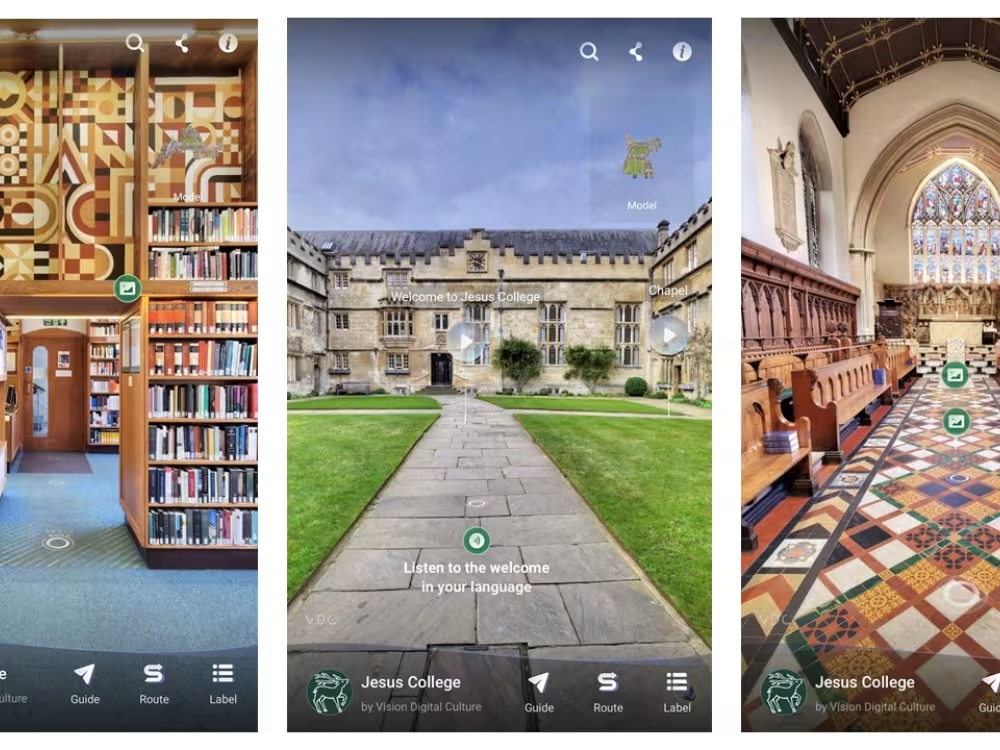
College launches 3D digital twin to widen access and engagement work
Jesus College has launched a new 3D digital twin of its Turl Street site with the aim of widening access to those unable to visit the college in person, and enhancing its public profile.
A digital twin is a virtual model of a physical object (like a building, artefact, or person) contextualised in a digital version of its environment. The digital twin replicates exactly its physical counterpart, and enables users to explore the object remotely via a smartphone, tablet or PC, and in three dimensions.
The aim of the Jesus College Digital Twin is to make the college more widely accessible, particularly to those unable to visit in person, for example, prospective students who live too far away, or for whom travels costs are a barrier, and members of the global academic community. It also provides a new opportunity for engagement with the general public and potential conferencing clients, using digital technology to bridge the gap between people and place. Through the digital twin, visitors can explore Jesus College in their own time, and at their own pace, from anywhere in the world, and on any digital device. The twin uses a simple navigation process to enable users to move seamlessly between college spaces, including the Jacobean Hall, Meyricke Library, Cheng Kar Shun Digital Hub and Junior Common Room.
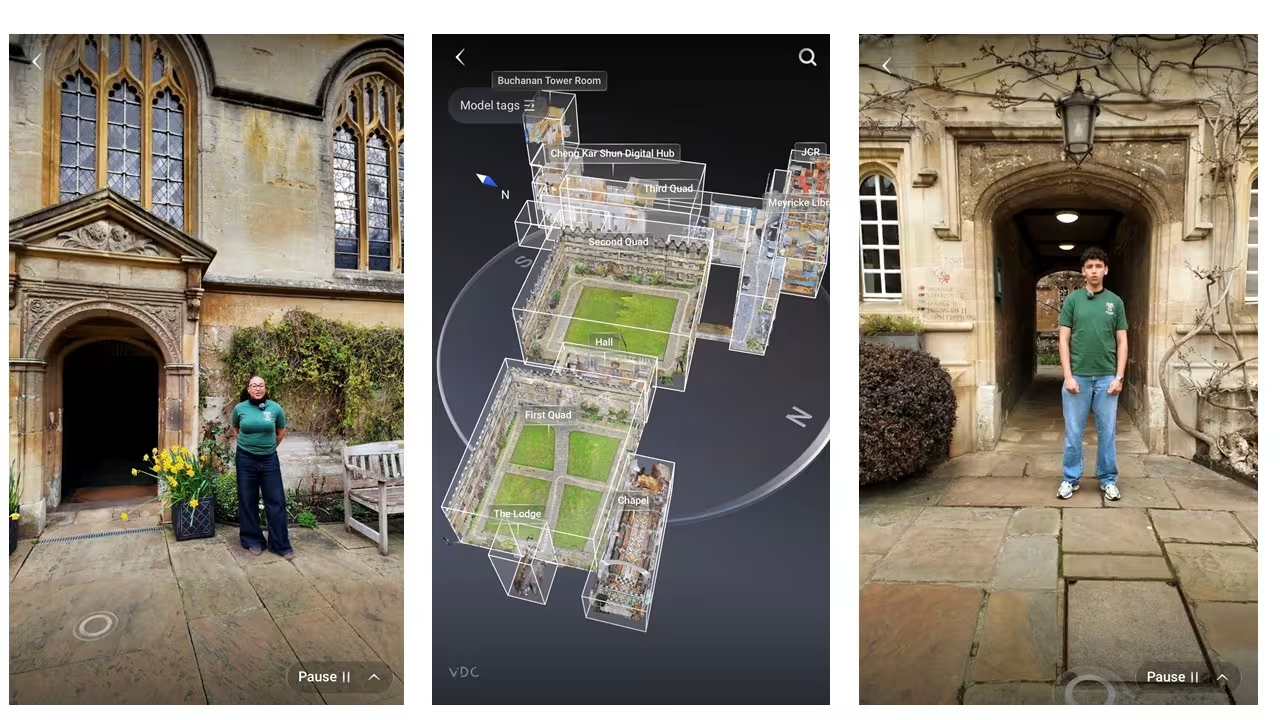
During the virtual tour, users will discover curated information about the college, its history and collections, and real-time narrations from current undergraduates about student life. To compliment and support the college’s access work, the student narrations are accompanied by an innovative translation tool that enables prospective students for whom English is not their first language to listen to the narrations in the language of their choice – including Welsh, Urdu and Mandarin.
The digital twin uses advanced scanning technology developed by Vision Digital Culture (VDC), a Bradford University-based company founded by Arthur Lyu and Annika Huang. VDC was introduced to the college by Jesus alumnus John Jagger (1957, Modern Languages). They used high-resolution cameras and laser scanners to capture every detail of spaces on the Turl Street site, and applied AI software to convert the data into detailed, navigable 3D environments. The company has previously produced digital twins and virtual tours of several heritage and educational spaces, including the Brontë Birthplace and Haworth Church. Jesus is their first Oxbridge college collaborator.
The project was funded in large part by a grant from the college’s Development Fund.
